Olivia’s Neurodiverse Heart & Peace Blog
Autistic or Just Rude? How to Tell the Difference
AUTISM PARTNER BURNOUT
When you buy through our links, we may earn a commission and as an Amazon Associate, I earn from qualifying purchases.
If you’re a neurotypical woman married to a high-functioning autistic man, you’ve likely been told, “Just be more patient,” or “He’s doing the best he can.” And while both might be true, that doesn’t mean you are fine.
Living in a neurodiverse marriage often means adapting, over-explaining, managing emotional disconnection, and holding space when your own needs aren’t being met. Over time, that takes a toll.
This is called autism partner burnout—and if you’re reading this, you might be deep in it.
The good news? You're not alone, and you're not broken.
There are ways through.
Let’s explore five signs of burnout and what you can do about each one.
🔥 1. You Feel Emotionally Invisible
The Sign: You’re constantly pouring into the relationship but feel emotionally dry and unseen. You crave emotional feedback, but it rarely comes.
What to Do:
➡ Start by identifying your core emotional needs. Then express them clearly, in writing if needed.
➡ Instead of asking for big emotional conversations, try small specific moments of connection:
“Can you sit next to me for 10 minutes after dinner?”
This often lands better with autistic partners than vague emotional requests.
💬 2. You’re Tired of Explaining Everything
The Sign: You feel like a translator, always explaining what you mean, how you feel, and why it matters. It’s exhausting.
What to Do:
➡ Use written or visual communication tools—sticky notes, shared calendars, texted reminders.
➡ Set a regular “check-in” time each week where you can calmly address small misunderstandings before they grow.
Pro tip: Use this 3-part phrase—“What’s bothering me is… What I need is… Can we solve it together?”
🧡 Discover the step-by-step playbooks that help both of you.
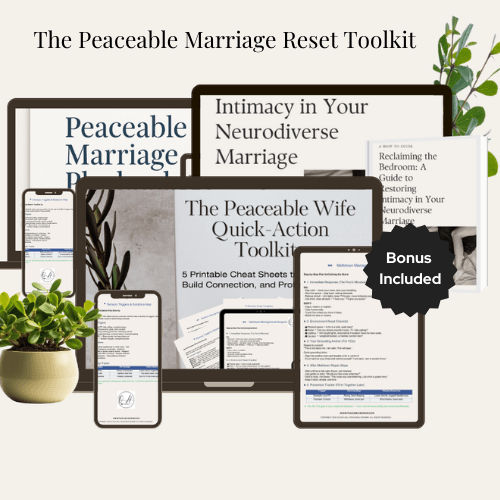
The Peaceable Marriage Reset Toolkit. Finally Understand Each Other, Build Emotional Safety, and Reclaim Peace in Your Neurodiverse Marriage — Without Exhaustion, Guilt, or Endless Explaining.💖
😔 3. You Feel Like a Parent, Not a Partner
The Sign: You’re managing logistics, emotional labor, and social expectations. Instead of a teammate, you feel like the default manager of everything.
What to Do:
➡ Renegotiate roles. Sit down together and make a visual list of shared responsibilities.
➡ Hand over full ownership of one task—even if it’s not done your way.
Burnout often softens when mental load is shared more fairly.
😡 4. Resentment Is Building
The Sign: You’re snapping more often or thinking, “Why do I always have to be the one who adjusts?”
Resentment is a sign your needs have gone unmet for too long.
What to Do:
➡ Write down your needs—without judgment or guilt.
➡ Pick one that feels most urgent and communicate it clearly.
➡ Seek support: therapist, coach, or community. You’re not meant to carry this alone.
Remember: expressing a need isn’t selfish. It’s a path back to balance.
🪫 5. You Fantasize About Leaving—Just to Feel Free
The Sign: Even when things aren’t “that bad,” you often imagine life without your husband—just to breathe.
What to Do:
➡ Don’t ignore this. It’s your inner self asking for space, not necessarily a breakup.
➡ Schedule personal time. Take a full afternoon or weekend to reconnect with you.
➡ Use that space to evaluate: What do I miss? What do I need more of?
Freedom inside the marriage often starts with boundaries and reconnection to self.
💛 Final Thoughts: You're Not Failing. You're Fatigued.
Autism partner burnout doesn’t mean your marriage is doomed. It means you’ve been running on empathy alone—and it’s time to refill.
Small, intentional shifts can create huge relief. Start by giving yourself permission to feel what you feel.
Then choose one thing from this list to try this week.
Prefer to Watch? More Support for Wives
Want Guided Help?
Dive deeper in the book:
📘 You're Not Crazy! He's Autistic – Guide & Journal for Women
Buy Now on Amazon!
Let's Stay Connected!
You're Not Alone!
xX Olivia Hall