Olivia’s Neurodiverse Heart & Peace Blog
What Emotional Closeness Looks Like in an Autistic Marriage
NEURODIVERSE CLOSENESS MAY LOOK DIFFERENT
When you buy through our links, we may earn a commission and as an Amazon Associate, I earn from qualifying purchases.
If you’re married to a high-functioning autistic man, you may often wonder:
“Why do I still feel so emotionally alone?”
He’s loyal. He shows up. He may even say he loves you. But something feels… off.
You crave connection. Intimacy. Warmth. A felt sense of “us.”
But instead, it feels like you’re living parallel lives.
Here’s the truth most people won’t say out loud:
Emotional closeness does look different in a neurodiverse marriage.
But that doesn’t mean it can’t exist—or grow.
Let’s explore what connection can really look like when one partner is autistic—and how to start building it today.
🧠 First: Redefine What Closeness Means
In a typical neurotypical-to-neurotypical relationship, closeness often looks like:
Expressing feelings verbally and frequently
Reading body language and tone intuitively
Comforting each other emotionally in the moment
But in a neurodiverse marriage, your autistic partner may:
Struggle with emotional expression or naming feelings
Miss nonverbal cues entirely
Need space before offering comfort
Love you deeply, but struggle to show it in traditional ways
If you're using a neurotypical yardstick, you’ll always come up short.
Instead, look for emotional closeness through a neurodivergent lens.
💡 What Emotional Closeness Might Look Like in an Autistic Marriage
Here are some surprising—but very real—ways autistic husbands often express love and closeness:
🧰 1. Acts of Support Over Words of Affection
He fixes your car, brings you tea, or reminds you to eat. It may not feel romantic, but these acts of service are often his way of saying:
“I see you. I care.”
📅 2. Prefers Routine Moments of Connection
Random emotional check-ins may overwhelm him, but a scheduled “us time” after dinner every night?
That’s something he can count on—and build trust through.
🧏♂️ 3. Listens Best When You Write It First
He may shut down in live conversations, but give him time to read your words in a message or journal—and you’ll often get thoughtful responses you didn’t expect.
🧸 4. Shows Affection in Quiet, Predictable Ways
He may not be spontaneous or expressive, but if he always sits next to you on the couch, holds your hand at bedtime, or makes your coffee the same way every day—that is love in action.
🤔 5. Processes Emotion Privately, But Cares Deeply
He may not match your emotional energy or seem “present” during a tough moment—but he often thinks about it later, deeply.
Sometimes he’ll come back hours (or days) later to try and make it right.
🧡 Discover the step-by-step playbooks that help both of you.
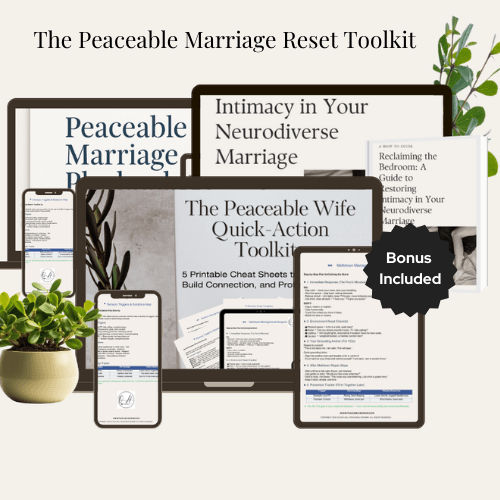
The Peaceable Marriage Reset Toolkit. Finally Understand Each Other, Build Emotional Safety, and Reclaim Peace in Your Neurodiverse Marriage — Without Exhaustion, Guilt, or Endless Explaining.💖
💬 What You Can Do to Build Emotional Closeness
Feeling loved in a neurodiverse marriage often takes translation and intentional strategy.
Here’s how you can help create more emotional safety and intimacy:
✅ 1. Name and Notice His Efforts Out Loud
“I noticed you made dinner again without being asked. That made me feel cared for.”
Affirmations help him connect the dots between his actions and your feelings.
🕰️ 2. Create Predictable “Connection Rituals”
Daily check-ins, Sunday walks, or even texting during lunch can build emotional rhythm—without chaos.
✍️ 3. Use Visual or Written Tools for Emotional Topics
A shared journal. A feelings wheel. A script.
These remove ambiguity and pressure—making emotional talk feel safer.
🧡 4. Ask for Closeness in Concrete Ways
Instead of “I just need more connection,” try:
“Can we spend 15 minutes together after dinner with no screens?”
“Would you rub my back while I talk about my day?”
Give him a doable, structured way to meet your need.
🔄 5. Let Go of the Myth That He’ll ‘Just Get It’
Closeness grows when you release the hope that he’ll respond exactly like you.
What matters most is not how he shows love—but that he’s willing to keep trying.
💛 Final Thought: It Can Be Enough
You don’t have to give up your need for intimacy. But you may need to reimagine how it looks.
When you stop waiting for closeness to happen naturally—and start co-creating it intentionally—a new kind of love can take root.
Quiet. Steady. Real.
Rediscover Your Spark: Reclaim Intimacy in Your Neurodiverse Marriage! 💖
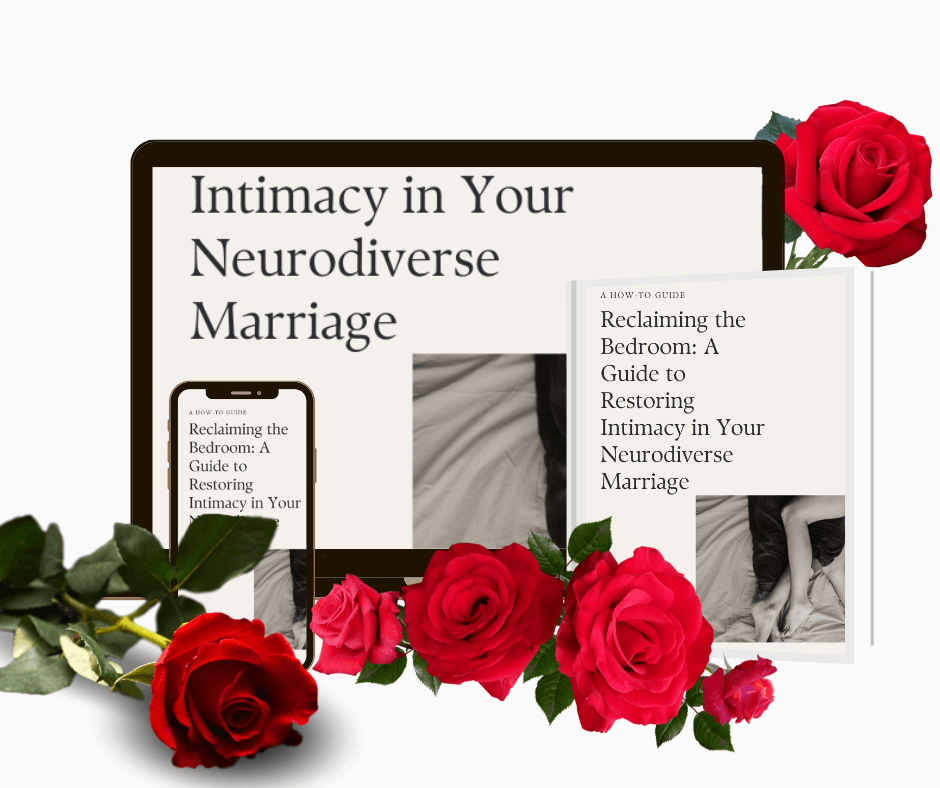
Hey, beautiful soul! Feeling more like roommates than lovers in your neurodiverse marriage? You’re not alone, and you don’t have to stay stuck! Reclaiming the Bedroom: A Guide to Restoring Intimacy in Your Neurodiverse Marriage is your heart-centered roadmap to reignite emotional and physical closeness with your autistic husband—on your terms. For just $47, Olivia Hall’s ebook delivers 5 powerful steps, myth-busting truths, and $100 in bonuses like the Intimacy Journal Prompts to light up your love. Ready to move from exhausted to empowered? Grab it now and say YES to a marriage that sparkles! 💖 Click the button below to Grab Your Copy Now!
💡 Ready for Practical Connection Tools?
Or go deeper with:
📘 You're Not Crazy! He's Autistic – Guide & Journal for Women
👉 Buy Now on Amazon
LET'S STAY CONNECTED!
JOIN OUR VIP NEWSLETTER TODAY!

You're Not Alone!
xX Olivia Hall