Olivia’s Neurodiverse Heart & Peace Blog
Meltdowns in Neurodiverse Marriage: How to Cope and Protect Your Love Before It’s Too Late
When you buy through our links, we may earn a commission and as an Amazon Associate, I earn from qualifying purchases.
If meltdowns in your neurodiverse marriage leave you wondering whether love can survive the chaos, you’re not alone.
Explosive emotional episodes aren’t just exhausting — they erode safety, connection, and self-trust.
But meltdowns can be understood, regulated, and navigated with intention — not just endured.
Feeling overwhelmed in your marriage?
Join my free Clarity & Calm Method Masterclass and learn how to calm your nervous system and hold peaceful hard conversations.
Why Meltdowns Happen (Brief But Evidence-Based)
Explosive emotional responses aren’t a character flaw — they’re a nervous system overload.
When emotions feel unsafe, the nervous system shifts into fight, flight, or freeze mode, making calm communication impossible.
This is especially true in neurodiverse marriages where:
sensory and emotional triggers differ by partner
communication styles feel mismatched
emotional safety is strained over time
Understanding this helps you move from blame → strategy.
The Reality of Autistic Meltdowns in Marriage
Let’s be real. Autism can bring amazing gifts—loyalty, honesty, deep focus.
But without emotional regulation tools, it can also bring meltdowns, rage, and emotional chaos that destroys the very connection both partners long for.
Meltdowns in autistic men often happen when they feel overwhelmed, criticized, or misunderstood.
The pressure builds internally until it explodes. And when it does?
It’s often the woman he loves most that gets hit hardest.
“I was just asking a question,” she says.
“And he lost it. Screamed. Cursed. Told me to shut up. I just stood there, stunned.”
He calms down hours later, maybe even acts like nothing happened.
Meanwhile, she’s silently grieving, replaying the blow-up in her head—wondering if she’s emotionally safe in her own home.
Meltdowns Aren’t Abuse — But Unchecked Patterns Can Harm
Let’s be clear:
A meltdown is a neurological response — not abuse.
But repeated yelling, cursing, or emotional intimidation without repair or safety signals can erode emotional safety if left unchecked. True safety comes from regulation skills + relational accountability.
Autism may explain the behavior, but it does not excuse harm.
“Love without accountability isn’t love—it’s chaos.” – Dr. Ramani Durvasula
5 Actionable Strategies to Reduce Meltdowns and Protect Your Marriage
1. Recognize the Early Warning Signs
Early signals — tension, irritability, sensory overload — often precede a meltdown. Naming them together helps you predict and prevent escalation before it explodes.
2. Create a “Regulation Plan” Together
Talk before meltdowns about:
what calms each of you
signs you need space
non-verbal cues that say “I’m overwhelmed, let’s pause”
This shared language builds safety.
3. Schedule Emotional Conversations
Ambush emotional talks are more likely to trigger overwhelm. Instead, plan them when both partners have energy and calmness — even if it means a short daily check-in.
4. Use Clear, Direct Communication
Indirect hints and metaphorical language can be overwhelming in a neurodiverse dynamic. Use clear statements like:
“I’m feeling overwhelmed. Can we pause and talk later tonight?”
This reduces misinterpretation and defuses emotional intensity.
5. Build Emotional Safety After a Meltdown
After a meltdown, it’s not enough that things are “back to normal.”
Try the 3 Rs:
Reflect — What happened?
Regulate — Calm first.
Reinforce — Clarify a boundary and repair plan.
This restores trust over time.
If regulating emotions feels overwhelming
— especially when meltdowns feel like they’re controlling the story —
my Peaceable Woman Quick-Action Toolkit gives you scripts, step-by-step tools, and calming anchors you can use immediately
Healthy Boundaries Aren’t Harsh — They’re Protective
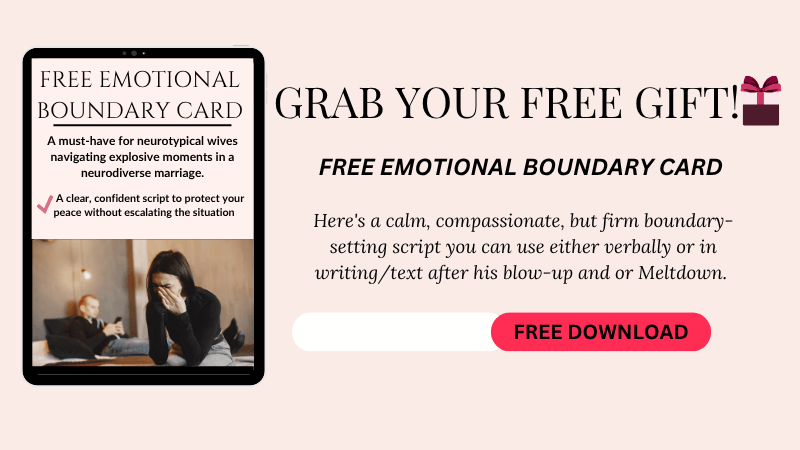
You don’t need to tolerate unsafe communication. You can set firm but calm boundaries like:
“I care about you and our love. But yelling and cursing aren’t acceptable. If it starts, we pause and return when calm.”
Boundaries aren’t about punishment — they’re about safety.
🌿And when you’re ready to go deeper
beyond tools into transformation — my course Frazzled to Fulfilled teaches you the nervous-system regulation and relational skills that rebuild connection from the inside out
Final Encouragement — You Don’t Have to Lose Love to Overwhelm
Explosive love doesn’t have to be the end of your story. With the right understanding, tools, and relational safety plans, meltdowns can become moments of redirection — not destruction.
You and your marriage can find peace even amid difference.
Prefer to Watch? Related Support for Neurodiverse Wives
Let's Stay Connected

You're Not Alone!
xX Olivia Hall